
How to Measure a Block Size
Example - Envelope size: 6 x 9 Booklet with 2” flap, ½” throat
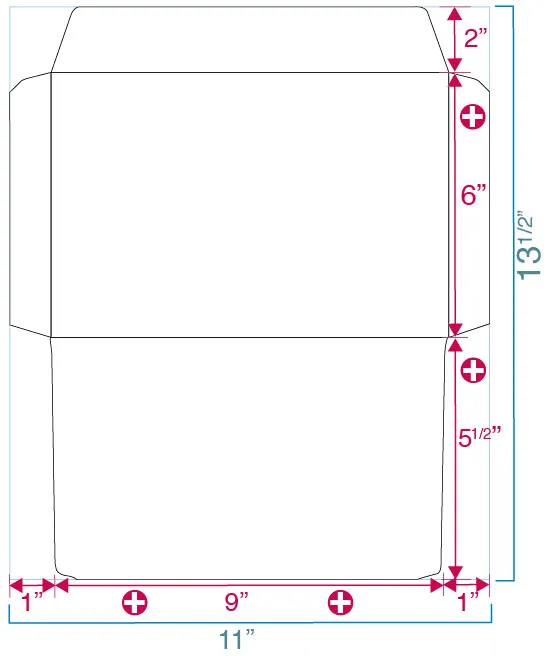
GRAIN LINE
Block size is a term used to describe the size of a flat, un-folded envelope. Block size can also be referred to as the sheet size of the paper required to make a certain size envelope.
Height: Flap (2") + Face (6") + Back (5-1/2") = 13-1/2" Grain
Width: Side Seam (1") + Face/Back (9") + Side Seam (1") = 11"
So the block size = 11" x 13-1/2" Grain.
Block size can be an important factor in calculating how many envelopes can fit on the size of paper being used. When submitting a flat sheet printing job, it's also important that you contact customer service to request the correct layout.
The direction of the grain plays a key role in how the paper will react when it comes to folding, scoring and binding. When creating an envelope, the grain of the paper should generally run PARALLEL TO THE LONGEST FOLD or parallel to the envelope’s opening.
In the example pictured, the grain direction is the longer length and the direction of the flap length.
Nesting Die-Cuts for optimal paper usage.
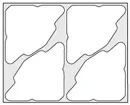
This style of printing usually dictates the use of several images on the same sheet.
You should request a layout for the envelope.
When laying out the art, make sure all the elements are properly laid out in relation to how they will be printed. Also, all the elements must fall within the acceptable printing area.